






KNOWLEDGE // WEBINARS

Mitigating Problems and Improving Durability in Water and Wastewater Infrastructure

Stephen W. Foster, Associate Principal and Unit Manager
Terrence M. McGovern, Associate Principal
1:03:02
 

Water and wastewater infrastructure are routinely subjected to harsh environments and susceptible to premature deterioration or failure of structural elements. However, with proper design and construction, new structures can reach their desired service life without the need for significant repair or rehabilitation. With effective mitigation strategies, existing structures where leakage or corrosion has initiated can be repaired and protected against further deterioration.

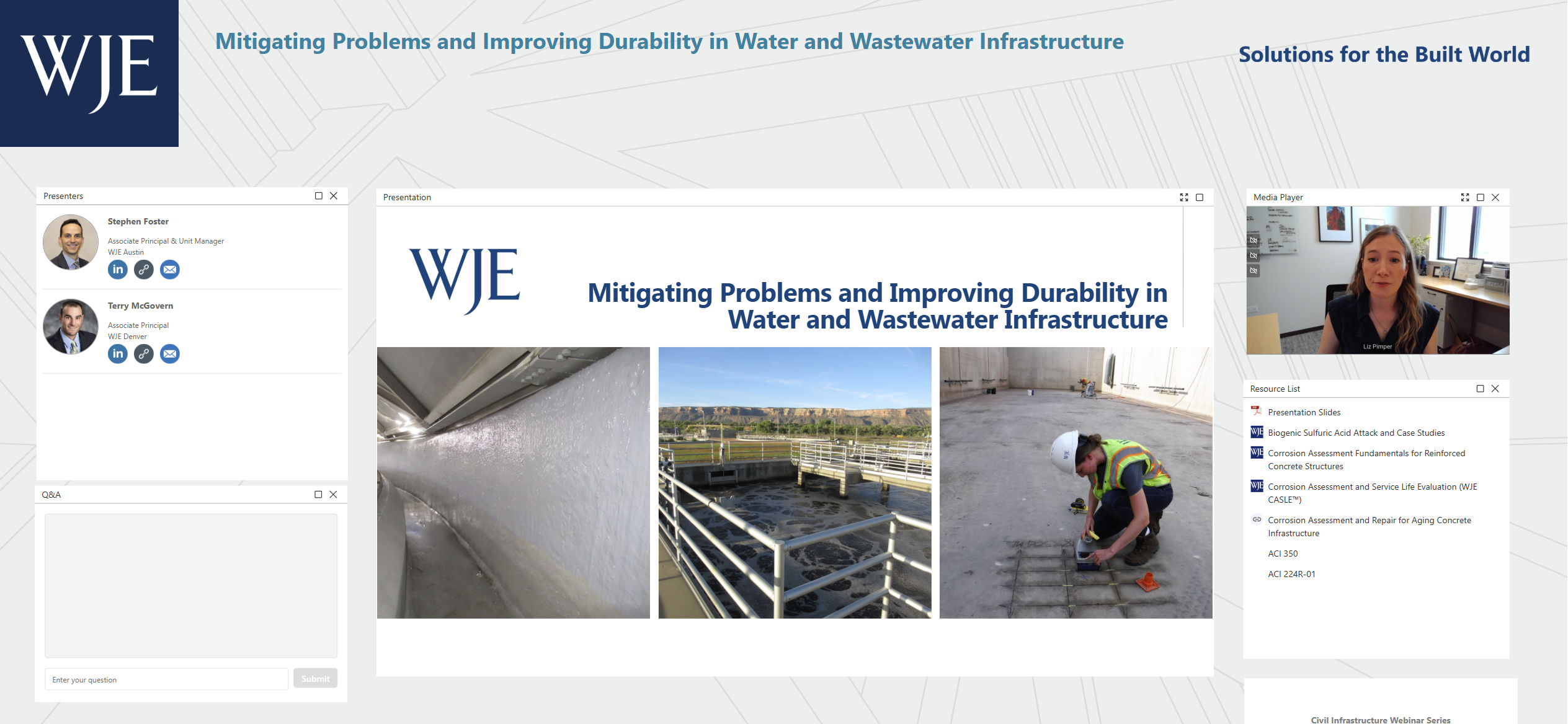
In this webinar, structural engineers Stephen Foster and Terry McGovern explore common distress mechanisms and mitigation strategies for improving durability in water-retaining assets. Project examples are used to illustrate different design and protection solutions and how these approaches are used to prevent or repair structural distress.

By the end of the webinar, you will be able to:

  • List common distress mechanisms for concrete water and wastewater structures
  • Identify actions that can improve durability of concrete water and wastewater structures
  • Describe common pitfalls to avoid in the design and construction of concrete water and wastewater structures
  • Compare different strategies for repairing concrete water and wastewater structures exhibiting distress
 
more to learn

View this webinar in our interactive audience console to earn 1 AIA HSW learning unit, access related resources, submit questions to the presenters, and download a certificate of completion.
View Transcript
WJE Webinars
Mitigating Problems and Improving Durability in Water and Wastewater Infrastructure
Stephen W. Foster, Associate Principal and Unit Manager
Terrence M. McGovern, Associate Principal
Liz Pimper

Hello and welcome to today's WJE Webinar, 'Mitigating Problems and Improving Durability in Water and Wastewater Infrastructure'. My name is Liz Pimper and I'll be your moderator during the next hour. Structural engineers Stephen Foster and Terry McGovern will explore common distress mechanisms and mitigation strategies for improving durability in water retaining assets. Project examples will be used to illustrate different design and protection solutions and how those approaches are used to prevent or repair structural stress. This presentation is copyrighted by Wiss, Janney, Elstner Associates. And now I will turn it over to Stephen to get us started. Stephen.

Stephen Foster

Yeah, thank you, Liz. Yeah, welcome everyone to the webinar. Terry and I are excited to present and discuss problems and improving durability and water and wastewater infrastructure. And these are the learning objectives we have today. What we really want to do is think about common distress mechanisms for these structures and then talk through how we can improve durability and help prevent some of the pitfalls that might lead to premature distress for some of those mechanisms. And talk a bit about how we can repair structures, either prevent or repair structures that are exhibiting that distress. And just by way of background and introduction, I know we've got a lot of different folks on the webinar who come from a variety of different backgrounds and experiences and relationships with water and wastewater infrastructure. So here's an example of a plant where I'm willing to wager just about everybody on this call.

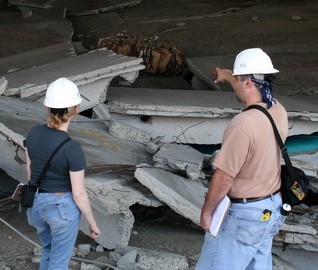
If you've got the technology to log into this presentation, the water you're either drinking today or the water that you're washing down the sink is either coming from or heading to a plant, something like this. So we all use these facilities and I'm sure some of us are working in them directly, just like Terry and I. This is a picture of Terry and I out at a plant similar to this one where we're interacting with these structures in some way, shape, or form. And the trouble for Terry and I, oftentimes when we get out onto a site like this, the structures aren't full of water. They're oftentimes drained, they've been cleaned, we're out there to look at something perhaps that's gone wrong or maybe it's gone prematurely wrong. Perhaps there's some distress that we need to evaluate and investigate and we don't want ultimately structures to look like this, right?

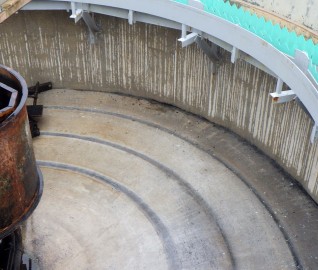
The goal is to have them full of water and doing the treatment processes that we all rely on every day. And so when we get out there, we might see a situation like this where there's some cracking, there's leakage, there's a problem that needs to be resolved, and we want to ultimately get those structures back up and running, be part of their treatment process and again, contributing to what we all rely on them for every single day. And so these structures in particular compared to other building structures, office buildings or other environments, there's some key aspects about these structures that we want to make sure are reliable for everyday use. And first of all, that means being watertight or liquid tight. They all are retaining water or liquid in some way, shape or form, and that's fundamental to their performance. Second is that these structures need to withstand unique exposure conditions.

Again, depending on the treatment process and which particular structure we're talking about. Again, either water or wastewater. There's unique exposure conditions again that are certainly different than a more commercial building space. And the structures need to be able to withstand those exposure conditions. And thirdly, perhaps for a long time, most of this infrastructure that's being built, it's being built for communities where we want those structures to last for the duration of the community surrounding community. Maybe that's a 50 year design life, 75, even a hundred year design life in some cases now or longer, these are going to be here as long as businesses, homes, communities, people in the surrounding area need water and or are going to be using wastewater. And so we've got these structures in it for the long haul. And so with those things in mind, what Terry and I want to talk about are kind of three main problems that we run into with these types of structures.

And there's a lot of other ones that we're not going to talk about. Things like freeze thaw damage or alkali silica reactivity that might happen in the concrete itself or things related to perhaps like turbulence or velocity and flow. There's numerous other topics. We just wanted to pick three that we see that are most common for these types of structures, and that's issues related to concrete cracking issues related to corrosion of the reinforcing steel and then chemical attack of the concrete material itself. And yeah, we'll start with that. We'll go through each of these kind of problems and talk about how can we mitigate those. And by mitigate I simply mean make them less severe, less serious, less painful. This is the dictionary definition of mitigate and I like it because it doesn't mean we're going to totally eliminate them or totally prevent them in some cases, but we can make them again, the consequence is less serious or less severe, or perhaps we can delay them for a long enough time to where we can meet the service life without running into some of these issues. And Terry's going to take us first and talk about concrete cracking.

Terry McGovern

Great. Thanks Stephen. Yep. So I get to start off with everybody's favorite topic about concrete and that's cracking. So got a couple photos here just to kick us off. Photo on the left we've got an example of some cracking that's been treated a little bit with a coating and also has some efflorescence. So evidence that we've got moisture moving through the structure and pretty clearly photo on the right, you can see active water leakage coming through cracks, so definitely evidence of leakage and issues there, but concrete cracks, I hear this comment all the time when I'm asked to come out to a structure, everybody kind of starts with that preconception or they take it a step further, right? We've got concrete that's cracked and we got concrete that will crack, right? It's kind of an accepted item within the industry overall that people just expect this.

And the trouble with our water and wastewater structures is that we don't really want them to crack. We have some problems that are associated with that cracking potentially, and why might we care about it, right? The first and probably main reason that most people care about it in a water and wastewater structure, it's supposed to be liquid containing, is if that liquid starts to leak, right? Either you've got water as I showed in that first photo or it's coming in or you've got or going out of your tank that isn't supposed to be going out. So the photos here show a couple examples of that. I like that photo on the bottom left that this particular structure had an alarm system set up to where they had a blinking red light when they would experience leakage. Most often we don't get quite an alarm like that that goes off when we have leakage, but it certainly draws the attention of those users that are in the facilities and rightfully so.

Photo on the right there shows quite a bit of cracking and some of that can actually, irrespective of the leakage coming out, it's also a bit concerning just to see the extent of cracking, which gets highlighted often by the leakage, they darken up those cracks, so can be a little more concerning. Another reason that we care about cracking is because of durability, independent of leakage, we have these structures that we want to last a long time. Like Stephen said, these are big massive facilities and we expect them to last a long time. And so durability and longevity, we want to have a durable structure. We want to have it last a long time. And when you've got a project like we see in the photo on the right here where we got into a tank and we saw this corrosion staining coming out of a whole bunch of cracks in joints, that's an indication that we've got some ongoing distress going on and that maybe our durability is compromised and longevity may not be quite what we are hoping for in the long run.

The other reason that cracking could be of concern is potentially structural, right? It could be an indication of some structural performance concerns, whether that's in potential overload or maybe the design wasn't quite what it needed to be, construction didn't match design, something along those lines. And for whatever reason, we've ended up with some cracking. The photos that are shown here are from a project we worked on where there was some panels around a tank that were bowing out and the cracking was occurring mostly in the center, so it was an indication that it wasn't quite performing as it needed to and warranted some further review. But again, there's a lot of items that we could go through. Stephen said we don't have time to go through everything today unfortunately, but the main three we're highlighting is the leakage, durability, and structural performance. And even of those three, the liquid leakage tends to be the one that gets us the most calls.

I'm sure it raises the most concern for most out there. I mean, while durability and structural performance are certainly important, structural performance is somewhat rare to see issues with that and durability. It's really about the long term. So it can be harder to recognize those upfront. But liquid leakage, everybody sees it right away and they can raise concerns. And when we get that call, one of the first things we're often asked is, what size crack should I be concerned about? And I wish I could sit here today and tell everybody, oh yeah, there's a perfect number here and you can use that, and it applies everywhere. But the fact of the matter is there isn't, and there is some guidance. The American Concrete Institute provides some guidance for water and wastewater structures, and it talks about cracks that are 0.004 inches in width. That should be the maximum that we consider for our water and wastewater structures.

Just for some perspective, if you take a 16th of an inch, what most of us might see on our rulers is the smallest amount. It's a quarter of that size. So these are really, really small cracks on the photo on the right here, you can see our crack gauges that we use, they don't even go to that level, right 0.05 is the lowest that we're at. So those are pretty narrow cracks and quite often depending on the situation, you can have cracks that are substantially wider than that, that don't cause any concern and they're not reason for concern. So things such as how thick is the element and why are the cracks there, those things matter in terms of determining what crack width you might want to consider is potentially problematic. So we've got something that we think is problematic, right? We've established that we're worried a little bit about it.

What can we do to mitigate that right from new design or from after the fact in existing structures? Well time out. We first need to start with why, right? We need to understand why the structure is cracked in order to develop the right mitigation approach. If you try to apply blanket solutions to all cracks that you might see, it's not going to be economically reasonable and it may not even address the issue overall. So it's all about understanding why we need to determine why in order to develop the right repair approach or the right mitigation strategy upfront to potentially address these items. So I've listed a few things on this slide. There are many, many more. I'll give you the dots at the bottom, there's any number of reasons why structure could be cracking and experiencing cracking, but I want to highlight these ones. And in particular, I want to highlight restrained shrinkage cracking.

So we'll talk a little bit more about that. But the other ones here, thermal volume change. Concrete is solid and solids expand and contract with heat. And so if you're, for example, where I am in Denver, we can have summer temperatures as high as a hundred degrees outside and we could have winter temperatures down to negative 20 or even a little lower. And so that's a pretty big temperature swing. These big massive water wastewater structures are located outside and they move, expand, and contract with the seasons. And so that thermal volume change, if not accounted for appropriately in the design, can result in cracking that could end up with leakage. One of our big concerns, Stephen also mentioned some deleterious reactions such as ASR. Those are another somewhat common cause for cracking in these structures given that they're exposed to a lot of moisture, but you've got to have a few things set up for that in particular, having the material that is potentially deleterious located there.

So that's one thing to consider in design for sure. And then you've also got structural loading, which I mentioned, and that can occur either just because it's exposed to something it wasn't anticipated to be exposed to or perhaps design or construction left it a little weaker than it needed to be. Final item there too, Stephen's going to touch on in detail as our next main topic, so I won't hit that too hard, but I do want to talk a little further about restrained shrinkage in understanding what causes that and why it happens. So I've prepared a little idealized figure here and concrete's a great molding material in that it goes in a plastic shape, so we can mold it into a lot of different shapes and orientations and do a lot of different things with it, but it has to go through a process of being in that plastic state or semi fluid state to ending up into a hardened state.

And what I'm showing here, the photo on the top is what it might look like when you're placing concrete. It's of a certain volume or certain size, and then that concrete shrinks down when, right? That's when we talk about restrained shrinkage. There's those two aspects and that second one, the shrinkage that occurs due to a number of reasons. First being the chemical reaction that takes the concrete and takes it from that plastic state and sets and reaches the hardened state, right? That chemical reaction that's occurring results in a little bit of natural shrinkage. In addition, that chemical reaction produces heat. And so as we talked about with the thermal volume change, if you have something that heats up, it gets a little bit bigger and so it expands and that heat that's produced during that curing process, that in and of itself also goes away as it cools down after that chemical reaction finishes up and that results in some shrinkage. The third is that concrete's a sponge and so it has some excess moisture in it and that excess moisture that's not needed for the curing of the concrete, that's going to dry out over time. And as it dries out, the concrete's going to shrink down a little bit, right? So we've got kind of the three main aspects that drying the thermal and the chemical reaction or autogenous shrinkage that's resulting in that reduction.

I've shown here what that looks like, right? So the top figure is concrete being placed. It's on rollers so it's shrinking down and it ends up into the smaller shape in the bottom position, but we don't have structures that are built on rollers. We don't have, that's an idealized theoretical construct there. What we end up having is a structural, like the one in the photo here where we've got potentially walls being placed on top of a slab and those walls being placed on the slab are now restrained by the dowels. The reinforcing we need for structural performance coming up out of the slab and extending into the wall, those dowels restrain the potential shrinkage of our concrete material as it's being placed. So if we go back to our idealized figure here, photo on the top now, or the figure on the top portion there, I've replaced those rollers with the dowels coming up.

And you can see in the figure on the bottom when we have those dowels, those are locking our concrete in place and so it ends up resulting in cracking and that cracking can be problematic because we don't want our structures to have large cracks that could potentially leak. So there's a few things we can do to help mitigate that potential cracking. The first is to attack that shrinkage aspect. If we can reduce the amount of shrinkage that we're going to have, then we can reduce the potential for restrained shrinkage cracking. So the figure on the left here shows what we have that goes into concrete materials. We've got some chemical admixtures, we've got some fine aggregates. Those are our sand that goes in. We got coarse aggregate, the rock that goes into the concrete, and then we have water and cementitious materials. So that's our cements, our natural pozzolans, our supplementary cementitious materials.

All the other things that are going in is powder, and that's shown in the figure on the right. Those are the powders going in, and those are the things that are reacting and ending up taking us from that plastic state into our cured hardened state. And if we group the water and the cementitious materials together, those two things combined we refer to as the concrete paste, and this is where the potential for our shrinkage comes from. So the fine aggregates in the rocks generally not shrinking a whole lot, but when we have our paste, if we have a lot of paste, it has a lot more material that's going to shrink up. So if we can reduce that paste volume, reduce our water cement ratios a little bit, reduce any extra water that we may have in there that can potentially reduce our shrinkage. So that's one aspect to reduce the restrained shrinkage cracking is to reduce shrinkage.

The other thing we can do is accept the fact that we're going to get our shrinkage and now we can provide some joints or places that we've pre-engineered to have our cracks occur at. So the example here is of a movement joint in which we're discontinuing some of the reinforcing. And in doing that, we then provide a water stop. So we know our joint is going to create a crack. We provide a water stop, which is the orange arrows I've just highlighted that can help to mitigate the big concern we have over water leakage or liquid leakage through that joint. But then we promote that joint to become active, to move open up through discontinuing some of our reinforcing. So we've got the purple arrow that shows reinforcing going through and we've got blue arrows showing reinforcing that stopped. So we have a joint where we now have discontinued some of the reinforcing. So in the project that we were looking at on the photo on the left, they implemented this approach in order to try to mitigate some of the potential restrained shrinkage cracking by allowing more movement at that joint and keeping it away from distributed cracks along the length of the wall.

The other way you can do that is we talked about the reinforcing, helping to dictate where our cracks and how active our joints might be is we can add more reinforcing into areas where we know we have a lot of restraint now reinforcing additional reinforcing across potential crack point that doesn't eliminate the shrinkage and it doesn't eliminate cracking. What it does is it distributes the cracks out over a couple of cracks instead of maybe just one wide one. So that's the figure on the right here. We're saying if we have ideally no reinforcing idealistic situation, we may get two big cracks. Well, if we add a reasonable amount of reinforcing, maybe we can produce four cracks and have all those cracks be tighter so that we don't have that potential for leakage through those cracks. The example photo on the left from a peer review we were working on is an example of this being implemented, an area of a maximum restraint the designer specified more reinforcing that's going to help to mitigate the potential for cracking that location.

So in this example, at the base of a wall, we have those dowels coming up from the slab. Same example we were using before. So that's being implemented to try to mitigate some of that cracking. The last one, and maybe one that not to hang your hat on too strongly here is placement sequence. So we've got some examples here of the orange highlights of placements that are occurring. Second, certainly our structures are massive, and so we're going to end up with multiple placements in a lot of these, and sometimes that placement sequence can help us to introduce joints that may help mitigate cracking. The other aspect is that we need to be careful when we're introducing additional joints and additional pores because we still have that potential for restraint. And so the bottom right figure highlights example of a slab, and when that slabs placed the second placement around the perimeter of it, where it's abutting the first placements, that ends up having more restraint, experiencing more restraint because of the dowels connecting.

And so we want to make sure that we've accounted for that with the little black lines you see in that figure. Those are reinforcing. The other examples is top figure there on the right is a tank that if you have a circular tank, for example, you could look at potentially not providing dowels, but just providing some blocks at the bottom to restrain movement there, but allowing it to move in the plane of the wall into and out of the page in this case. And then as I said earlier, the photo on the left introduces some placement sequencing to allow for addition of joints and help to mitigate some cracking in that manner. So all great for new structures. We have all these tools that we can do in design to mitigate, but what about for existing structures, right? It's existing, it's built being built in the process of finishing construction.

Now I've got cracking. What do I do? And there's a lot of things that you could potentially do. It all goes back to that investigation of understanding why the cracks are occurring, right? And that's the biggest emphasis. Understand why perform an assessment, get out there, what do we up against? What are we trying to mitigate? Example of one thing that we often see done for water wastewater structures and we've specified it. These examples are two projects we've worked on. Photo on the left, there is a gentleman installing urethane grout into isolated cracks. And that urethane grout works by penetrating into the crack, expanding and then sealing up that crack to mitigate water leakage through the crack. The advantage of that is that it could be done discreetly. You can address a few different cracks, but you need to understand why, right? You aren't going to use urethane grout if you have a structural concern or if you have large voids or honeycombing in the wall, that's not going to be as effective of an approach.

So you need to understand why. And similarly, the photo on the right here, it was an attempt to use urethane grout injection, but there's a lot of ports as you can see in that photo. There's a lot of those silver ports distributed all across the surface of that wall. In that instance, it may not always be the best case to use that. And we may look at something else such as a coating or a aligner. This could be a more appropriate approach depending on the layout of your cracks, the cause of those cracks. However, you need to be careful that you're designing the coating appropriately, selecting the right materials, detailing joints, and detailing over your cracks appropriately. So this is an example of a project where this was done for a number of reasons, cracking into mitigate leakage through the walls. Next, I'm going to hand it back to Stephen to talk a little bit further about corrosion of reinforcement.

Stephen Foster

Yeah, thank you, Terry. Continuing on with another, although somewhat related, like Terry mentioned, some cracking can be due to corrosion. But another problem that we run into and how do we mitigate it, how do we improve durability with respect to corrosion of the reinforcing steel? And normally when we think of concrete, concrete will provide a protective environment for that metal that's embedded inside most of the time is our reinforcing steel. And that's because it's a high pH environment. So that high pH environment will create a protective layer around the reinforcing steel that we talk about as the bar being passivated, or its passivation layer. And over time that passivation protection can break down things like even carbon dioxide, maybe more in an atmospheric exposure on the outside of a tank perhaps, where that process will eventually lower the pH of the concrete or other deleterious materials like chlorides or chemicals that can penetrate into the concrete and over time breach the depth of the reinforcing steel and then break down that protective passivation layer.

And so the thing to remember here, and Terry touched on this a little bit with the concrete materials piece, it is strong, it's a durable material, but I want you to remember, basically your concrete is a sponge. I mean, it's a big, hard, strong gravelly sponge. There's air in there, there's a pathway for these types of chemicals to permeate. Sometimes at the molecular level, it's not as porous as a sponges obviously, or wouldn't retain the water, but chemically you can think of it that way. So that allows for some of these products and materials to penetrate over time. And not only that, but with regard to water and wastewater environments, there's usually some variability in the exposure zones too. Like we're showing here on a tank structure, there's an area that's going to be constantly wet and continuously submerged. That corrosion process is going to need oxygen to promote that chemical reaction and the chemistry that occurs there with the corrosion cell.

So maybe that might be a little bit better in terms of long-term corrosion performance. But then there's these other areas that can change too. Maybe some locations of the structure that are intermittently wet, where if due to operational conditions, the water levels in the structure vary that area right above the water line, even if the water line is constant, might get some splash depending again on the operation and the turbulence and the structure at hand. And then an area above the waterline that's high enough up to basically be dry, but maybe it's high humidity. And again, if there's a ceiling or a roof structure in place, maybe it is a gaseous environment, atmospheric environment that can be pretty aggressive to the concrete as well. And the same thing can happen in pipelines. It's not the focus of our discussion today with most of these examples, but a similar environment can happen within a concrete water or wastewater pipe where you've got different areas, again, depending on the operation and the volume inside the pipe, there's areas that are constantly wet or intermittently wet or areas that are constantly dry.

So those will also affect the performance and corrosion activity within the structure. And so when we think about corrosion, oftentimes we wonder, isn't corrosion pretty obvious? Certainly for steel structures. Here is an example of a steel hatch cover from a plant where once the coating starts to break down corrosion initiates, you start seeing the red oxide rust all over the structure. And yeah, it's time to do maintenance and recoat oftentimes in a steel structure, but even for a concrete structure like some of these photos were showing of the exposed corroding reinforcing bars, that becomes pretty obvious. But really for concrete structures, it's often a matter of timing. And so when that structure is first cast here, and we've got an image from just a hypothetical piece of concrete with a single rebar in it, and when that is first cast, like we talked about, it's a high pH environment, the bar is passivated, there's no corrosion activity happening.

But over time, those deleterious materials might penetrate through the concrete say that are in the water. And once those reach the depth of the reinforcing steel, well now corrosion can initiate if there's enough oxygen available and the conditions are right now, it's no longer protected by that passive layer and corrosion can occur, but at this stage, the structure still looks the same. There's no visible damage or indication that the structure is corroding or the reinforcing steel's corroding. It still looks like solid sound, good concrete, but internally corrosion has started. There might be some internal damage. That corrosion product, the rust is expansive, so it takes up more volume than the original reinforcing steel does. The iron oxide expands and so now there's maybe internal cracking and that will then continue, that corrosion will continue unless something's changed. The corrosion will continue to where eventually now there's surface damage and maybe at this stage it's still relatively minor.

Maybe it is those cracks like Terry was showing and maybe we're even start to see some indication of some orange reddish oxide staining coming out of those cracks. This bottom picture on the right is a core sample where we cut out an area where we presumed based on some of our other testing that there was some corrosion activity happening. And we were able to take a core right there and see basically like this cartoon diagram is showing, oh yeah, there's corrosion, this crack is there, there's even some expansive corrosion product that's starting to migrate out of the crack. And again, that will then continue and now even further advance because of the crack that's there, the pathway for those deleterious materials and oxygen can now get to the bar and again, cause continued corrosion to where eventually it'll now become that advanced surface damage where the concrete itself is now fractured off because the corrosion has expanded to the point where it even pops off the concrete cover that's on the outside of the reinforcing bar.

And now at this stage, yes, it's obvious and it's time to do some repairs, but the hope of this process is to prevent it from getting to this stage. At this stage now there's sping, there's even concrete that's spalled off that maybe has gotten into the tank and it's now it's affecting potentially impacting operations and the use of the structure. And so at this point, what we're really wanting to do is prevent the corrosion from getting to this stage. And so a lot of times when we think about looking ahead to mitigating this problem, a lot of the question is really not if but when, how long will it be until corrosion starts and we get to kind of that second stage or perhaps even how long is it going to be until we start seeing those cracks or the surface spalls? And not just how long, but how many locations if this, say the center photo, just one corner bar, if that corrosion and spalling happens at one location around the tank in the first 30 years, 50 years, okay, well maybe that's okay, but what if it happens everywhere on the entire perimeter of the tank in 20 years?

Is that a problem? Right? So we have to think about not just when, but at how many locations. And there's a lot of variables that go into that. So when we think about mitigating, how can we again make it less severe, less painful for corrosion to occur? It's similar questions to what Terry was describing on cracking. Well, what is causing the corrosion? What are those materials that are penetrating into the concrete, what's caused that passive protective layer to deteriorate? And then coupled on top of that mechanism of what is again, the when questions, right? Well, has corrosion started yet, where are we at in this process of concrete that's new that maybe does or doesn't have some amount of deleterious materials penetrating into that sponge like material or have we already started to see some surface damage or certainly on the right where we now have corrosion exposed and we know the reinforcing steel is corroding and not only corroding, but the concrete is spalled off and now we need to do a different level of repair.

We can repair any of these phases and implement repair strategies at any stage, but where we are in that process will help dictate what the best solution is. And so similar to cracking like Terry talked about for new structures, before we even design or build the structure, we can do things to help improve the long-term durability and performance. And so that's going to include things like using more durable concrete materials, using different reinforcement design even for some new structures. We might use a coating or aligner similar to what Terry described if we know it's a really aggressive environment. And the goal here is to keep stage one, stage two of either no corrosion or maybe some corrosion starts, but it hasn't led to the point of major surface distress or damage within the desired lifetime. And again, that desired lifetime might vary from structure to structure, plant to plant, depending on the operation and the desires of the owner and what's achievable for the specific condition.

Again, certain structure types might have more severe or less severe exposures depending on the process in the plant and what liquids being contained. But for new structures, and when we talk about doing a durable, more durable concrete mix design, a lot of the same things that Terry talked about with that paste structure of the mix, we can lower the permeability. So what we'll do is optimize the mix design to want to lower that water to cement ratio, which is similar what Terry was describing to help with shrinkage, but using some of the supplementary materials like fly ash or silica fume or others to basically slow down that penetration rate. So now when we think about deleterious materials and that sponge process, we can make our concrete mix less permeable and which will slow down the rate at which some of those things like chlorides penetrate through and eventually get to the depth of the steel.

Maybe again, we can slow it down to the point where it either functionally never reaches the steel or it'll reach the steel beyond the end of the service life perhaps, or it's going at such a slow rate that again, it buys us more time and it helps the structure last longer before the reinforcing steel breaks down, that protective passive layer breaks down and corrosion initiates. Now some of those things when we do that, it helps for long-term performance, but it might also make the placement more difficult to have a lower water cement ratio, right? So there's pros and cons to optimizing your mix design, but we can optimize your mix to be more durable where it's needed. And then secondly, like Terry already talked about, if we can optimize that mix to help reduce the shrinkage potential and hopefully have either less cracks or tighter width cracks, everything Terry was describing before that will also help improve durability and corrosion performance because those cracks are a pathway for those deleterious materials to migrate into the concrete.

And so this picture here in the lower middle with the pink color indicator, the pink is just an indication of high pH. And so you can see here at that location the pH near the crack and around the crack has penetrated not just at the surface but through the crack and on either side of that crack, where now that protective passive layer again would've broken down any reinforcing steel that's crossing through and in that crack area. In terms of reinforcing design for the actual rebar itself, there are things you can do to also improve the performance of the steel and the durability of the steel over time. And so first you can increase the concrete cover depth, and so the covers just the depth of the reinforcing steel from the surface of the concrete. So for the same structure, perhaps you could increase the cover depth like you see here on the right.

And now even for the same mix design, say the rate of penetration of those deleterious materials is the same. Well now you've got a deeper cover, increased amount that material has to penetrate over time. Now the caution there is depending on the structure type and the type of cracking, if you're going to lower that reinforcing steel or make it deeper into the structure, that could be detrimental to the crack widths where ideally having the bar closer to the surface of the concrete will help tighten up those cracks. So again, it's an optimization game where you're wanting to optimize cover depth with shrinkage performance and not getting too much cracking to where again, you don't want to have a scenario where you put the bar so deep that they're not helping restrain the crack widths at the surface. But cover depth is an option, and again, sometimes it doesn't have to be much, but increasing the cover depth, even another half an inch can buy a lot more time until corrosion would initiate.

And alternatively, again, with the cost associated with these, you could use alternative reinforcing materials, things like epoxy coated bar or galvanized reinforcing bar. In some cases an extreme conditions and stainless steel bars could be an option. Each of these that are shown here have pros and cons, and there's associated structural implications related to these that need to be considered in the design. But in terms of a corrosion performance, adding another protective layer, say if it's an epoxy coating on the reinforcing steel, well now that provides an additional layer of corrosion protection beyond just the normal passivation layer that occurs in, again, the high pH concrete. When it's first cast, the epoxy coating itself provides another layer to help prevent corrosion and slow down that corrosion process.

And Terry touched on this for protective coatings, these can be used for both new or existing structures. And again, particularly in environments where it's more aggressive and maybe there's increased chemical need to protect the structure, things like PVC liners can also be used cast in place with initial construction as a stay in place liner to basically now provide the barrier to the environment from the structure. So now those deleterious materials won't be able to penetrate into our concrete sponge. There's going to be a liner in place. Now, certainly a protective coating, any of these mechanisms, any of these solutions, potential solutions will now become an item that needs to be maintained, but it will help prevent penetration of those materials into the structure. And sometimes you can see here the photo on the top right is a mockup of a coating system. These can often be multiple layers.

Again, depending on the environment and more aggressive conditions, sometimes they even include embedded fiberglass mesh and a multilayer system. It's not just the same as putting up a coat of paint in your drywall in your office. This is going to be a much more robust protective coating system that can withstand the conditions and help prevent corrosion. So when we think about, and again, those can be used both on new and existing structures, but when we think about existing structures, what we really want to do first is figure out, like Terry said with Kraken, we want to know why on corrosion we want to do an assessment to figure out where are we in this stage of corrosion? Because even within one structure, there might be multiple areas and multiple exposure conditions like we talked about before. And okay, we want to get a good feel for where are we at in this process.

And these inspection tools aren't the main focus of our presentation today, but there are tools we can use some semi destructive tools like even taking core samples and running laboratory tests or doing some of the images you see here with scanning to identify the depth of cover, running some half cell potential testing or evaluating corrosion rate. These mechanisms will help us identify where are we at in this process, in this stage of corrosion at different locations throughout the structure. And so getting a good understanding of those things will help then inform, okay, what type of repair strategies could we use? And we already talked about coatings or liners we talked about we will talk about cathodic protection here in a minute. And then certainly doing concrete repairs, that's going to be where we now have that stage four corrosion damage. The concrete has spalled off, so that's going to be essentially our only option at that point for the most part when we get to that stage to restore the concrete section.

And each of these options have pros and cons, right? There's not a one size fits all, especially depending on where we're at in the process. We'll want to maybe use different solutions and different strategies and each of them will have a different performance implications in terms of things like ongoing maintenance or initial cost and how it might impact operations. So there's lots to consider here, and we'll talk a little bit more in depth here now about cathodic protection specifically. And if you're not familiar with cathodic protection, most commonly, you probably run into this with steel structures using something like hot dip, galvanizing, which we're probably more familiar with, and we can use basically our science chemistry class, Hey, things like zinc or aluminum, we can turn that into the portion that corrodes, and you can do the same thing for concrete structures. So you can thermally spray zinc onto the surface of the concrete.

What you'll do is connect that zinc to the steel and then now you're providing that zinc to be the anode. So our reinforcing steel is no longer the portion of the system in the corrosion cell that's going to corrode will basically have the zinc be a sacrificial coating that will now corrode instead of the reinforcing steel. And again, this is similar to what would be done in hot-dip galvanizing for example. So you can do that as a spray applied system to concrete structures. You can also use drilled in systems where now you're embedding the zinc within the structure itself and again, making a connection to the reinforcing steel. And again, the goal on all that. Now again, say an example where you've already got some contamination and corrosion maybe is about to start or will start, or in some cases maybe it's already started in some areas.

Again, now you're providing the zinc to be the metal that corrodes instead of the reinforcing steel. There's also options to do this with exterior. So instead of sprayed onto the surface now using like a zinc mesh that's embedded within a mortar that has a fiberglass stay-in-place jacket when they cast or use the grout place the grout. So this is an example from a trickling filter project where those support columns beneath the filter media had some corrosion and to prevent further corrosion and mitigate that in the future using these zinc mesh anodes embedded in these fiberglass stay in place jackets was an option, a good solution. And that jacket provides the benefit of also providing another barrier, so additional deleterious materials won't get in. So that has a supplemental benefit to that particular option. So here was an example here on a sump structure where at the pump soffit in particular there was corrosion. You can see the photo on the top right. It had already gotten to the point where several areas of the structure had that last stage of damage and corroded reinforcing was exposed. So we needed to do a combination of concrete repair where we would remove that deleterious concrete that's spalled around the reinforcing, expose those bars, clean them off with abrasive blasting, get rid of the active corrosion, and then we used a combination of coating system and metalizing in certain areas to prevent and mitigate the potential for future corrosion manifesting again in this structure.

Lastly, we want to discuss chemical attack. And so this chemical attack now is not just causing corrosion of the reinforcing steel, it will, but it will also actually deteriorate the concrete material itself. The surface of the concrete will be eaten away, and this can happen in a variety of chemical environments where we don't really have time to touch on all of them, but things like sulfuric acid attack, hydrogen sulfide, again, you see the picture here of a structure like a pipeline. Some of these can be in other enclosed structures, oftentimes in wastewater environments where most often if it smells bad, it's also causing some attack to the concrete. And Terry was going to touch on briefly another particular type of chemical attack, which is calcium, leaching and concrete.

Terry McGovern

Yeah, so Stephen's example, and commonly when we think about issues with chemical attack, we're thinking about wastewater structures, but we have similar things that can happen on our drinking water side. On the clean water side, the photos provided here an example of a project where the owner drained a tank and through their cleaning process they were noticing that the pressure washing was taking off a lot more of the cement paste than it previously had. And the photo on the right, actually this is after just draining it, not even washing, they had what looked like kind of paper mache sitting on the floor. Well, that was actually the degraded cement paste that had just come off of the wall. And the cause of this is that if our water ends up, the water chemistry changes and it has lacking minerals, the concrete is a great source of those minerals, and so the water's going to try to steal those and take those away.

Unfortunately, that leaching process degrades the performance of the concrete and results in this distress. One way to diagnose this or look at this is to have to go through and take a core sample. So the photo on the right here, upper right is a core sample that's been extracted. After that's extracted, it's taken back epoxys injected on the surface as it's a little bit unstable and then it's sectioned in half. That's the photo on the bottom. And if we look at that zoomed in the photo on the upper left, we can see that leached or gel-like layer kind of stabilized there a little bit with epoxy, but that's being degraded and falling off. It's a prime example of this event taking place. And then we can also see increased carbonation below, so changing in color of the concrete, and that's as a result of the fact that we've got a much more porous surface because of that leaching impact.

And then the nice gray cement paste down at the bottom. So in this project, some changes in the water chemistry resulted in quite a bit of distress to the concrete structure. What do we go about doing to mitigate this? Certainly we can look at providing a little bit more concrete, as Stephen was talking about, similar to corrosion issues, but that has its pros and cons, more durable materials, particularly on the wastewater side. We can use different cements and then coatings and liners, which we've talked about already in adjusting that water chemistry when you have the ability to do that in the process and considering maybe the adjustment of water chemistry and the coating or coatings or liners. And that's great for new structures and we can still use coatings and liners and adjustment of water chemistry in existing, but a lot of times we look at repairs and potentially surfacing the concrete, adding more surface to that concrete as we know it's degrading.

In summary, we've gone through cracking corrosion of reinforcing in some of the chemical attack and the chemical attack being probably pretty commonly known and addressed. The thing we want to leave everybody with for our new structures, there's a lot of options We have to try to mitigate these forms of distress on the new structure side, right? All in the design phase, we can optimize our mix design, we can use a combination of proper jointing and additional reinforcing potentially in certain areas we optimize that cover depth. As Stephen said, you want to add more for corrosion, but you don't want to add more because you don't want to increase your cracking potential. So there's a balance there. And then we can install coatings and liners upfront. So that's a way we can go about mitigating it. And then if you can adjust some of those, the water chemistry means sometimes we're locked into what we need to do for the process, but that ability is there.

In some cases, on the existing structure side, we have that same potential for adjustments in water chemistry, but here we really need to understand why if we don't have control over everything, because we're not in the design phase, we need to understand what's going on, what's gotten us to this point so that we know how we can mitigate this crack injection. We talked about concrete repairs. The big takeaways here are understand why weigh the pros and cons. Every project is going to be different, every owner's needs are different. Every goal for long-term performance service life is different. And keeping in mind that cost now is always less than cost later and balancing that with the long-term goals for the property. With that, I thank you guys for attending today. I'm going to kick it back over to Liz so we can get to some questions today.

Liz Pimper

Alright, thank you Terry and thank you Stephen for the great presentation. Alright, let's take our first question. How is service life determined for structures like these?

Stephen Foster

Yeah, I'll give it a shot, Terry. Feel free to jump in. Yeah, I think oftentimes if we're thinking specifically about the corrosion question I guess is how I'm interpreting that oftentimes it'll become how a discussion on how many areas of surface damage are problematic. And that can be an area where we again varies by the structure, by the importance to the structure. There's operational considerations, right? Certain structures, maybe if there's a small piece of concrete, it might be more detrimental to the operation of that tank compared to others. And at what threshold is that a problem? Do we want to say 10% of the areas, 20% of the areas are now corroding and have surface damage? So it becomes a discussion of, hey, how much spalling and surface damage for corrosion is an issue. Usually it can also maybe if an answer is, well I don't really care about that, what if it corrodes to the point where now the structure's compromised to where maybe something's going to fail structurally beyond the surface spalling. But usually it's a discussion with the owner to evaluate, okay, how much longer will it be until a certain amount of surface damage manifest and in certain structures maybe again, that are more or less critical to the operation and to the performance of the tank if something were to spall.

Liz Pimper

Okay, our next question, could you discuss the proper sequence to conduct a tightness test per ACI three 50.1 through two two,

Terry McGovern

So I can feel that a little bit. So the question here is referencing ACI three 50, which is three 50 is generally the committee within ACI that covers water wastewater structures and they have a specification document. The 0.1 which goes over, it's written as a specification, goes over tightness testing without digging project specific. Because the one thing about this is tightness testing should be performed prior to backfilling or hiding the structure. I think that's probably the number one thing I would just emphasize in general, without going through step-by-step on the tightness testing requirements, that's one thing we see quite a bit of is that it isn't done in that manner and then it's kind of a, well, we don't know where water's going, we don't know where the problems are and it can just make tracking things down a lot more challenging. So I guess that's the one tidbit I would leave on that and if you further questions, we can possibly handle 'em offline.

Liz Pimper

Alright, our next question is about circular tanks. Is the section with discontinuous horizontal reinforcement still providing enough capacity for ring tension or is the tank designed such that ring tension is discontinuous along the walls longitudinal joint?

Terry McGovern

I can take that kind of interpret. That was I think one of my slides. So the slide shown there, you're actually using the hoop tension now to resist the load within the tank. And so there is no discontinuous horizontal reinforcing. You've got that continuous through the whole structure and so it's just the discontinuity of the dowels coming up. So the vertical reinforcing extending up from the slab or the foundation ring foundation up into the walls in that case.

Stephen Foster

Yeah. Maybe if I could just add on that one, Terry. I think on, I think Liz, can we change the slides? So this one here where it talks about 50% of reinforcement passing through a joint, Terry, that would be more for a rectangular tank or something that's not relying on the hoop stress, correct? Yeah,

Terry McGovern

That's exactly right.

Liz Pimper

Okay. This next question says, I've seen textbooks recommend adding reinforcement steel to prevent shrinkage cracks, but you've suggested they only limit crack widths. Can you elaborate on why adding steel can't eliminate shrinkage entirely?

Terry McGovern

Well, the addition of steel isn't, isn't trying to eliminate shrinkage cracking. It's trying to distribute it. So you could reach a structure in a situation where potentially you've mitigated it appropriately to where the stresses that are produced inside the concrete member don't actually result in a crack or you could result in cracks that are so fine, you're not even seeing them or you're certainly not seeing them highlighted with leakage. So it's not, again, it's not that they're preventing the shrinkage, it's that they're mitigating the problems that come, is a part of that, the cracking.

Liz Pimper

Okay. Which characteristics would lead you to choose protective coatings over PVC liners or vice versa?

Stephen Foster

Yeah, I can start on that one, Terry, and yeah, happy to have you jump in here too. Yeah, certainly a protective coating and maybe we're talking about, again two different things on a new versus existing on a new structure, certainly the cast in place liner, there will be added costs there, obviously the cost of the liner, but in terms of form work and casting the concrete and the overall cost of the project, that can be a good option when it's again, an aggressive environment where we know there might be a combination of things, perhaps the chemical attack, which then can also contribute to reinforcing corrosion. And so using a stay in place cast in liner, obviously for when it's newly cast can be a good option. The protective coatings are going to be a long-term maintenance item, again, kind of sacrificial. It's there to protect the concrete and the reinforcing behind it, but over time, that'll eventually need to be replaced. And so in my experience on new structures, the cast in liners, if it is an aggressive environment, those are used probably more commonly than a liquid applied coating. But again, it will also depend on the chemical environment as well and the more aggressive conditions, maybe it leans more towards some of the liners.

Liz Pimper

Okay, this person says I have a compression member with a fall and loss of cover, but no exposed reinforcement. Given the risk of progression, what is the recommended timeline for repair to prevent further damage?

Stephen Foster

Yeah, that's a good question. So this is talking about where we mentioned where are we on that process of corrosion, and it sounds like in this case there's at least one area where it's manifested in surface damage, but doing a more comprehensive assessment to say, okay, well why is it spald in that one location and potentially not the other location. So perhaps if that area, there might have just been shallower cover because the tie of the column was shallow there and that's what's corroded, but maybe we scan and evaluate covered depth in the rest of the locations and realize, oh, all the other bars are actually half an inch deeper than this location and it's kind of a one-off. Or is it an indication that actually multiple other areas are likely already corroded already starting to crow, they just haven't manifested yet into visible surface damage. So doing that assessment will help identify, hey, how many other areas are potentially already corroding like this, and how long might it be until something else manifests in on that column? So yeah, doing an assessment, we'll definitely be able to help evaluate that and forecast out how long will it be until other locations look the same.

Liz Pimper

Okay. How beneficial is installing zinc anode in new construction as compared to during repairs?

Stephen Foster

Yeah, most commonly it's done during repairs on existing structures in real aggressive environments. You might install something on the front end and I didn't cover impressed current cathodic protection, which is not just relying on the galvanic difference between zinc and steel, but actually uses a power supply to provide protection in really extreme scenarios, maybe something like that might be done. But yeah, the zinc is not going to start to corrode until there's a need for it to corrode. So that timeframe of my animated orange diagram of the deleterious materials penetrating, if it's going to take 15, 20 years for that to even happen, you're paying now for the cost of putting the zinc system in and it might be 15 years before it even is activated, in which case most oftentimes we're better off maybe playing with some of those other strategies on the concrete mix design or the reinforcing that's used to optimize that durability as opposed to installing zinc from the beginning.

Liz Pimper

Okay. We've got time for one more question. As the submit industry moves towards Type one L, have you seen any durability issues in the field yet?

Terry McGovern

Well, I can start certainly as we introduce new materials, there's challenges. Those are challenges not just associated with the material itself, supply of that and the change in the chemistry of it and whatnot, but we also see just a change in how the industry adapts and works with it. So in terms of durability specifically, yes and no. There's been changes, there's been issues with finishing placements and other things where people have had challenges and I think some of that's working through use of a new material and understanding how those react. Now in terms of long-term, we've got some history of durability testing and use of the one L cements in other regions of the world that indicate durability can be adequate if done properly. And I think that's the key, right? It's about getting things done properly, designed mixed design through placement and curing and everything like that. Certainly challenges with lower heats of hydration can cause me issues in colder climates at times, right? When people aren't expecting to need to provide as much heat. So where those go for durability and I think in the field we'll wait to see.

Liz Pimper

Okay. Well thank you Terry, and thank you Stephen again for the great presentation and for all of these helpful answers. So again, thank you so much for your time and we hope you have a great rest of the day.

This is a transcript of a live webinar and is being provided for convenience only. The transcript may contain inaccuracies, misrepresentations, and/or errors. It is provided as-is without any warranties, guarantees, and/or representations of any nature whatsoever regarding the correctness, compatibility, accuracy, and/or completeness of any information contained herein. This webinar and the accompanying transcript are intended for educational and informational purposes only. The content is not intended to be a substitute for professional advice and should not be relied upon as such. WJE disclaims all liability for any direct, indirect, or other damages arising from the use of the information contained within this webinar and accompanying transcript. All rights to any images or other copyrighted material used in the webinar and accompanying transcript belong to their respective copyright holders.